CHRISTIANITY’S GREATEST BLESSING — AND ITS GREATEST CANCER
WE BRING EVERYTHING TO THE CHURCH EXCEPT OURSELVES.
When Jesus confronted the Jewish religious order of His time, He exposed a terrible contradiction.
There were ceremonies, offerings, traditions, prayers, and outward expressions of devotion to God. Yet Jesus confronted religious leaders who neglected the heart of what God required.
They brought the outward expressions of religion.
But where was the surrender of the life itself?
Now look at Christianity.
We bring our prayers, our worship, our churches, our traditions, our declarations of faith, and our celebrations of Jesus Christ.
But have we brought ourselves?
Have we actually laid down our lives and given them entirely to God?
Or have we simply brought Jesus into the lives we have chosen to live?
Have we mastered the very failure Jesus confronted?
Consider your own life. Answer these questions honestly—not about somebody else, not about another denomination, but about yourself.
DOES YOUR LIFE REFLECT A GENUINE WALK WITH JESUS CHRIST?
Do you worry? Do you call it your worry?
Why? Do you own your worry? Do you own tomorrow? Do you own your circumstances?
You own none of these things. A genuine walk with Jesus Christ means surrendering what you have been trying to control and giving this day to God.
Do you drink alcohol or use drugs?
Ask yourself whether these choices reflect the life of goodness, purity, and surrender you claim to be pursuing through Jesus Christ.
How do you dress?
Would you dress that way if you were standing before Jesus Christ, fully conscious of God’s presence? Are you presenting yourself with dignity and purity, or are you seeking sexual attention from others?
What does it mean to give your life to God if you continue to let the standards of the world determine how you present yourself?
What do you watch?
Do you watch whatever you want on television or the internet in the name of entertainment? Is it filled with violence, horror, degrading content, sexual stimulation, or pornography?
Have you ever stopped to ask whether what you willingly consume belongs in a life surrendered to Jesus Christ?
Do you treat your body as a temple of God?
Or do you put whatever you want into your mouth in pursuit of flavor, pleasure, and entertainment?
Have you considered what it means to exercise restraint, to fast, to spend a day drinking only water—or to undertake a longer fast when appropriate and safe?
Do you understand why a person seeking God might voluntarily set aside food and other comforts, quiet the demands of the body, and turn more completely toward God?
Do you support violence as a means of resolving the world’s problems?
Do you support war, military violence, guns, and ammunition without seriously examining whether those choices are compatible with the life Jesus calls us to live?
Jesus said that those who take the sword will perish by the sword. How can we claim to pursue the kingdom of God while refusing to confront the place violence occupies in our lives and our world?
Do you believe you will never be good enough because you are only human?
We are created in the image and likeness of God. To use our humanity as a permanent excuse for refusing to pursue goodness and purity is to sell short the very dignity with which we were created.
We are not being asked to claim that we are perfect. We are being asked to take seriously the life God calls us to live.
These questions are not about appearing religious. They are about whether our choices reflect a life genuinely offered to God.
And none of us gets to escape them by pointing to someone else’s failures.
THIS IS WHAT SURRENDER MEANS
We do not own this day.
We do not own our lives.
We do not own our worries, our sickness, our losses, our circumstances, or our future.
Nothing is ours to possess as though we were the ultimate authority over our lives.
This is the path of unconditional love: to stop insisting that life must belong to us and to give ourselves entirely to God, pursuing goodness and purity in the way we live.
It is not enough to bring our prayers to church and then return to a life governed by our appetites, our preferences, our fears, and our desire for gratification.
It is not enough to proclaim Jesus as Lord while continuing to act as though we are the lords of our own lives.
The Jewish religious order Jesus confronted could maintain outward religious observance while failing to live the heart of God’s commandments.
Christianity must confront the possibility that it has repeated that same failure on a global scale.
We have brought everything to the church, everything to our faith, everything to our declarations of belief.
But have we brought ourselves?
Have we given God the one thing He is asking us to surrender—our lives?
THERE IS NO MORE HIDING FROM THE QUESTION
This is not an invitation to judge other people. It is a demand that we examine ourselves.
If you claim to follow Jesus Christ, ask yourself whether you are actually living that commitment.
Not perfectly. Not by merely following a list of rules. But sincerely, with a willingness to surrender what stands between you and the life God calls you to live.
Do you want goodness and purity—or do you want the freedom to pursue whatever pleases you while retaining the comfort of your Christian identity?
Do you want to give your life to God—or do you want God to fit into the life you have already decided to live?
These are not abstract theological questions.
They are questions about what you do today.
This course leads to a crash. We are already living in its consequences.
The time has come to stop making excuses, stop postponing surrender, and stop treating the demands of Jesus Christ as though they were optional.
I AM NOT THE BOSS. GOD IS.
I DO NOT OWN THIS DAY OR THIS LIFE.
I GIVE IT ENTIRELY TO GOD.
I AM HERE TO CULTIVATE GOODNESS AND PURITY.
This is the choice before us.
We can continue to bring everything to the church except ourselves.
Or we can finally put our lives down and give them entirely to God.
THE CALL IS NOW. VICTORY IS OURS.
If this message challenges you, do not dismiss it simply because it is uncomfortable.
Examine your life. Ask God for the willingness to surrender. Begin with this day.
You do not need to wait for somebody else to change.
You can begin now.
JOIN THIS MOVEMENT
Take the first step.
Email Info@JesusAtMySide.com and write LIFE in the subject line.
We will send you a most powerful and encouraging message called THE GREATEST HEALING.
If, after reading this message, you are sincerely inspired and value what it shares, you will then have the opportunity to join this free movement.
This movement is for individuals, pastors, ministers, priests, and leaders of faith from every path and denomination who follow Jesus Christ.
Free membership provides access to a weekly message of encouragement and to our library of messages and resources.
The purpose is simple: to stop merely professing the life Jesus calls us to live—and begin living it.
Give this day to God. Pursue goodness and purity. Put your life down.



The greatest single roadblock to true unconditional love throughout the ages has always been one word.
And when you hear this truth, it will likely rattle your soul just a little bit because of its haunting truth.
That word that has blocked unconditional love throughout the ages is
OWNERSHIP.
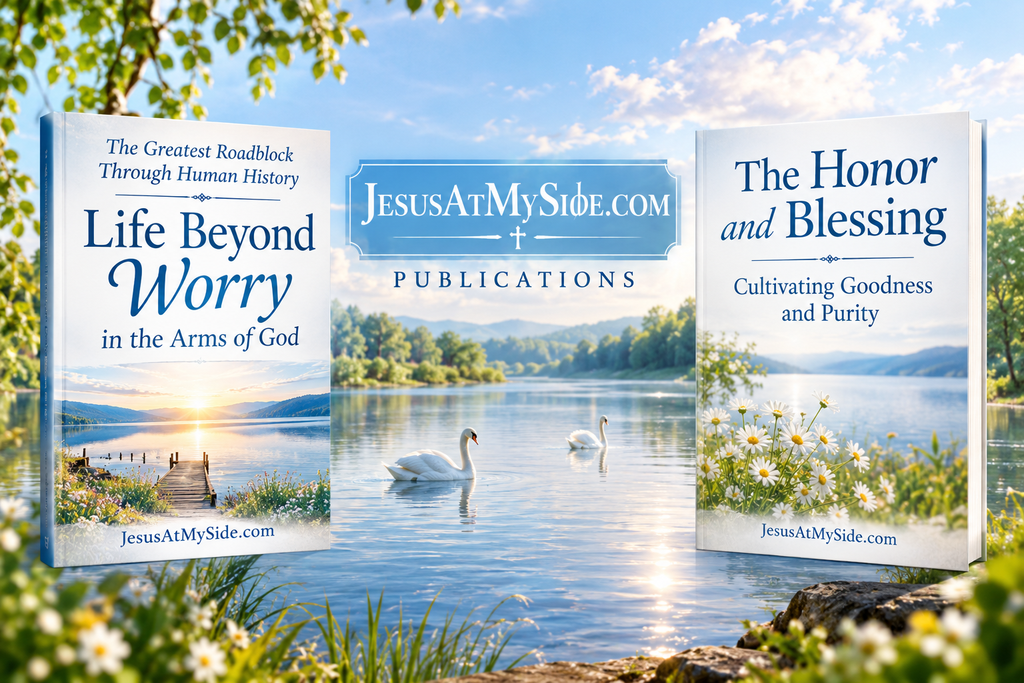
For those who are serious in their walk to glorify God, the answer and the way forward is the path of non-ownership and the cultivation of goodness and purity.
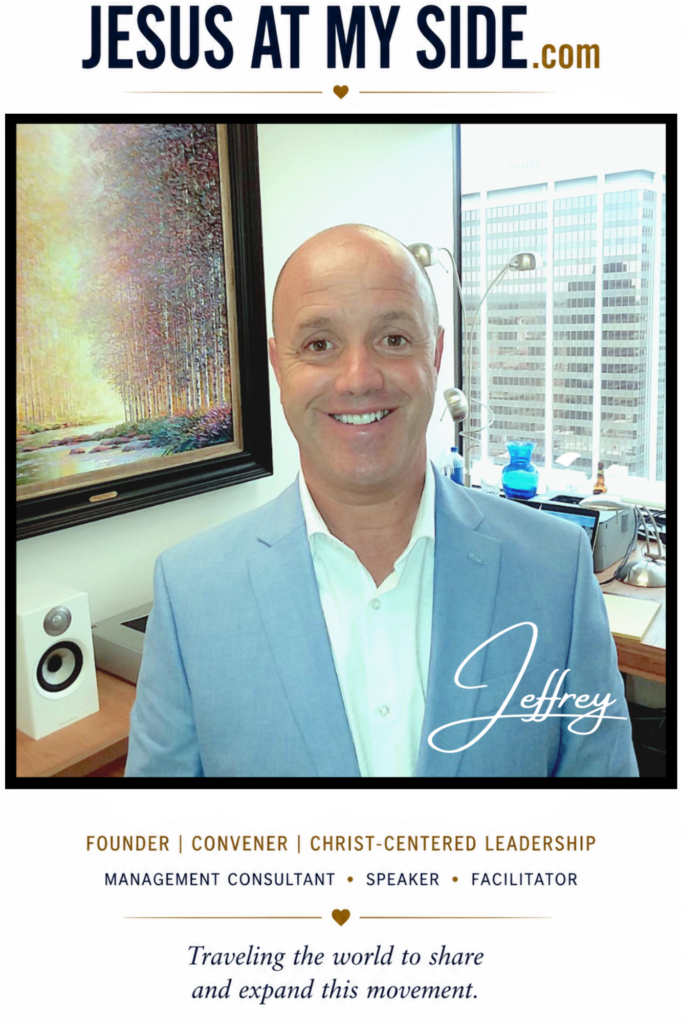
Jeffrey
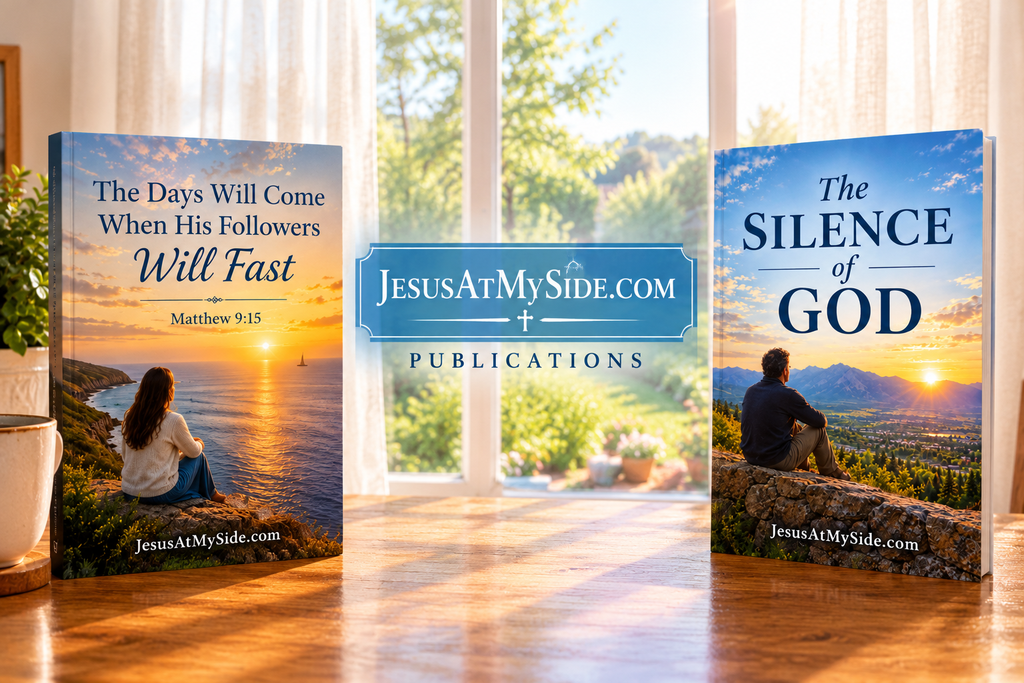
An Excerpt from The Silence of God
Chapter 1: The holy silence is a gift of God
The pursuit of silence and stillness has traditionally been associated with practices of sitting and watching the breath or following mantras. These ideas have been widely presented from paths such as Buddhism or Hinduism, and explicitly documented in historical spiritual guides like the sutras of India. Let us get one thing completely out of the way, there are followers of the Bible that have some strange idea that silence, a state of non-thinking is against God in some way. This is like saying watching a beautiful sunset in a state of non-thinking is wrong??? There will be times of silence waiting to hear on the Lord and times of just dwelling in the holy silence of God apart from thoughts just as you would sit on a park bench and have thoughts melt away. You will find scriptures ahead that support the gift of silence from the very nature of God. As for renewing your mind, of course continually renew your mind! For generations, there have been endless human efforts to organize a mechanical process to calm the mind, cataloging steps, frequencies, and postures to engineer peace.
This is absolutely not what the Silence of God and the gift and grace of silent holiness is about.
The holy silence is not a mental state achieved through rigorous human discipline or psychological formatting. While Eastern traditions and secular mindfulness philosophies approach stillness as a mountain to be climbed via meditation techniques, divine silence is entirely distinct. It is not an achievement of human willpower, nor is it a baseline reached by shutting off the senses through sheer concentration.
Even with all of the efforts that human beings have made to slow down their thoughts to experience mindfulness and enter practices of daily meditation, if you look closely you’ll discover that very few people manage to stick with these processes. They may have a season of their life where they sit and meditate more. They may experience slower lifestyles and mindfulness, but usually, in most cases, it does not last. Ask someone who has pursued meditation and mindfulness—ask them over the course of a five or ten-year period if it stayed, if they’re really living a more deeply committed way of life in this regard. They will almost always tell you that life, its busyness, and its demands won them over in the end. They’ll speak of a time when they may have experienced some of those practices, but if they’re honest, they’ll tell you it didn’t last.
Why? Now let’s be clear: most people don’t even do that. But the answer for those that tried is that it did not last because it required too much effort. It was a battle against a state of mind that has no interest in grace, and against a lifestyle that truly surrenders. When our efforts are born from within a mind of gain and loss—a mind that is continually driving for states that are temporary stillness—it never truly arrives there. It cannot. It is operating within an operating system that is fundamentally always about gain or loss in some way.
The mind’s hunger for stimulation is relentless. But this mind is not the way of God. This is the antithesis; it is the way away from God. You see, when we stay within the operating system of a mind that is operating under the fuel and pursuit of constant stimulation, of course we want peace. But we’re trying to achieve that peace from within the very operating system that opposes it. It is a dream of separation—a dream that will throw ideas of peace at you until restlessness eventually overrides it. So yes, some people have slowed down. They have learned to sit quietly. But if you look closely, they’re still operating within the storytelling mind whose ultimate fuel is gain and loss, driven entirely by ideas that are fueled by stimulation.
So many of you, if not all of you, would say, “I can’t slow my thoughts down; it never ends. I am always thinking and I have no idea how to get out from under it.” This realization is actually an honest gift. Recognizing your own helplessness under the crushing weight of the mind is the first fracture in the ego’s armor. Grace is never something that we force or push into our lives. Rather, grace is the result of a sincerity in how we are living one day at a time.
If you take two people who were completely overwhelmed by endless thinking and they were essentially identical—and one would try to enter the Silence of God without deeply living a life for goodness and purity, and a state of non-ownership, giving their life sincerely to God, while the other made genuine, heartfelt efforts to cultivate such things—you must know intuitively which one would enter the Silence of God with a natural unfolding, just as the other would find it almost entirely impossible. Is this not such a fair blessing? Somehow, in the creation of God, what we sow truly we reap.
But why—why is this gift, the Silence of God, so rarely accessed by the people of this world? If you look into the various religions and spiritual traditions, you’ll rarely, if ever, see any discussion about entering this silent holiness, a gift that comes solely from the grace of God. We are taught how to petition, how to perform rituals, and how to speak, but we are rarely taught how to dissolve into the quietude of the Maker.
Yet, the blueprints have been left for us. Consider the following scriptures. Ponder deeply why they exist, and see how they call us away from human striving and into the absolute passivity of holy grace:
- • “Be still, and know that I am God.”
- • “The Lord is in his holy temple; let all the earth keep silence before him.”
- • “Truly my soul finds rest in God alone… Yes, my soul, find rest in God alone.”
- • “Peace, be still.”
- • “But when you pray, go into your room, close the door and pray to your Father, who is unseen.”
- • “The Father spoke one Word, which was His Son, and this Word He speaks always in eternal silence, and in silence must It be heard by the soul.”
- • “For God alone my soul waits in silence; from him comes my salvation. He alone is my rock and my salvation, my fortress; I shall not be greatly shaken.”
- • “The Lord will fight for you, and you have only to be silent.”
To mistake the Silence of God for a humanly manufactured calm is to mistake a creation for the Creator. Human effort creates a closed loop where the mind attempts to quiet the mind—an internal exercise that begins and ends with the self. True holy silence, however, is a direct downward movement of divine presence. It is a heavenly substance that enters the soul not because a procedure was executed correctly, but because God has sovereignly chosen to bestow His rest. It is a gift unearned, a grace unmanufactured, and a spiritual reality that requires the complete cessation of religious labor.